The Allure of Modern Chandeliers
Why the modern chandelier has moved from palace ballrooms to everyday homes, and how to judge size, light output, finish and smart controls before buying one.
3 min
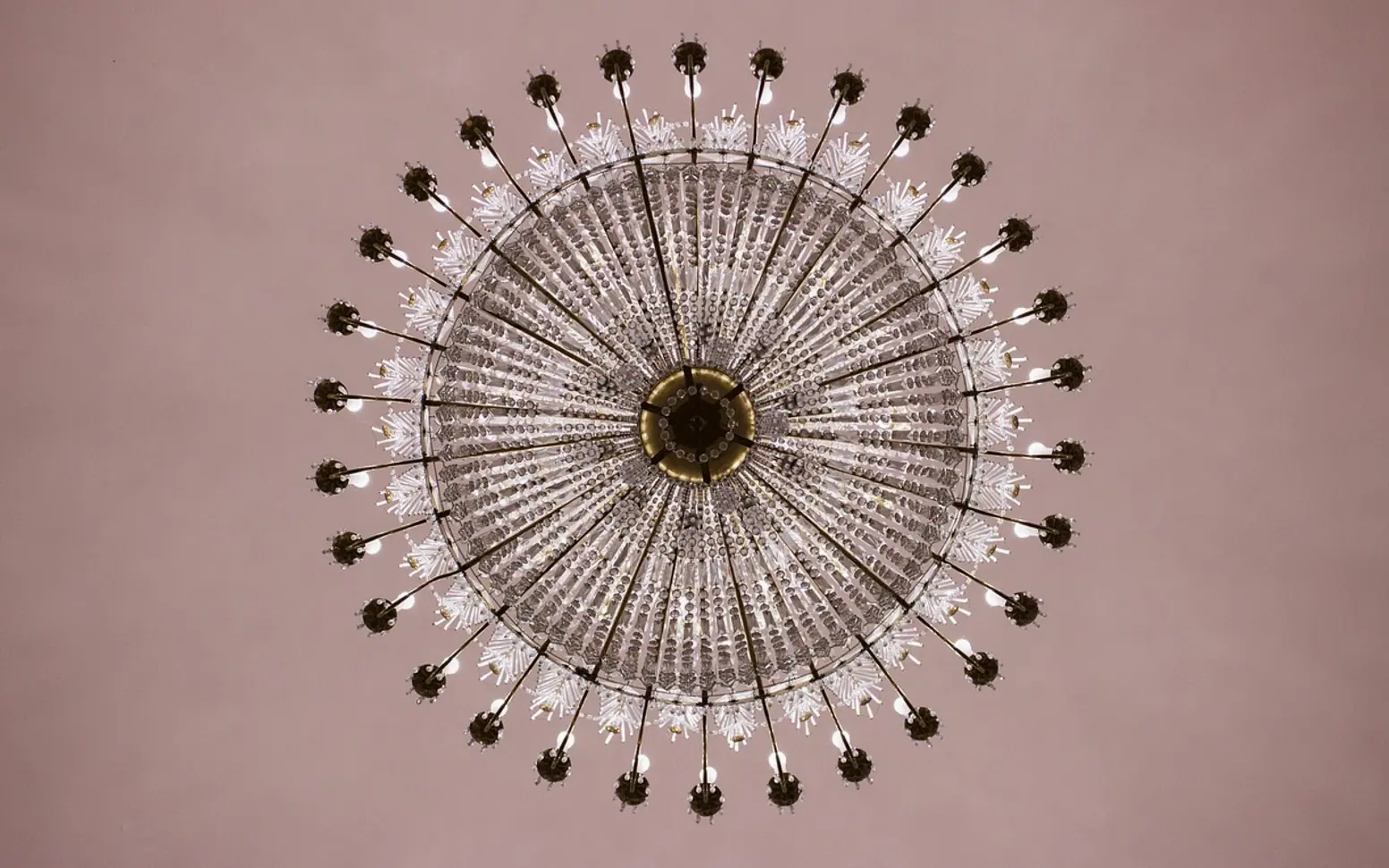
For a long time the chandelier was shorthand for money: tiers of crystal, gilded arms, a ballroom ceiling high enough to show it off. Look through current interior feeds and home makeover shows, though, and the fixture keeps turning up somewhere else entirely, above a kitchen island, over a narrow dining table, in a bedroom with an ordinary ceiling height. The modern chandelier has kept its sense of occasion while shedding most of the formality.
What changed in the design
The shift is less about decoration and more about shape. Contemporary pieces tend to be built around a single idea, such as a ring, a cluster of globes, a cascade of slim rods or a loose branch form, rather than layer upon layer of ornament. That restraint is what lets them sit comfortably in rooms furnished with plain sofas, oak floors and open shelving.
Materials followed the same path. Brushed brass, matte black steel, smoked or ribbed glass, linen shades and even reclaimed wood all appear in current collections. Each one handles light differently: frosted glass softens it, polished metal throws it around the room, fabric warms it. Choosing a finish is really choosing the mood of the room after dark.
Why LEDs made the style possible
Integrated LEDs did more than cut running costs. Because the light source is tiny and runs cool, designers can hide it inside thin tubes, flat discs or the edge of a glass panel. That is why so many modern fixtures look weightless and hang close to the ceiling without overheating anything around them. It also explains the low-profile versions now made for flats and townhouses where a traditional multi-tier piece would simply knock into heads.
Many fixtures also arrive with adjustable rods or cables, so the same model can hang high in a stairwell or drop low over a table. Some are modular, letting owners add or rearrange elements when a room changes use.
Matching the fixture to the room
| Room | What tends to work | Points to check |
|---|---|---|
| Dining area | Linear or ring designs that follow the table shape | Width should stay comfortably inside the tabletop edges |
| Living room | Statement clusters or sculptural forms | Head clearance where people walk underneath |
| Bedroom | Flush or semi-flush pieces with diffused light | Glare when lying down, dimming range |
| Hallway or stairwell | Long vertical cascades | Access for cleaning and bulb or driver changes |
Smart features worth having
Dimming is the single most useful extra, because a fixture bright enough for homework at six can feel harsh at ten. Beyond that, tunable white light, app or voice control and scheduling are now common. Shoppers browsing the modern chandeliers available at Seus Lighting will find designs that combine sculptural shapes with this kind of everyday control, which is handy when one fixture has to serve dinner parties and quiet evenings alike.
Before ordering, it helps to confirm that the dimmer in the wall is compatible with the fixture's driver, and that any app works with whatever smart-home system is already in the house.
A few practical last checks
- Decide whether the chandelier is the main light or an accent, and plan lamps or spots accordingly.
- Check the weight against the ceiling fixing; heavier pieces may need extra support.
- Think about dust: open frames are easy to wipe, while dense glass clusters take longer.
- Leave the connection and mounting to a qualified electrician, especially above stairwells or tall ceilings.
Handled well, a modern chandelier gives a room a clear centre without shouting about it, which is probably why it has become one of the most photographed objects in home design.
 How to Clean a Dishwasher
  How to Choose the Perfect Wall Mural for Every Room in Your Hous
  Greener Pipes, Lower Bills: How Plumbing Services Support Water and Energy Savings