How to Make a Terrarium
How to make a terrarium step by step: choosing an open or closed jar, building drainage and soil layers, picking plants that suit it, and simple aftercare.
4 min
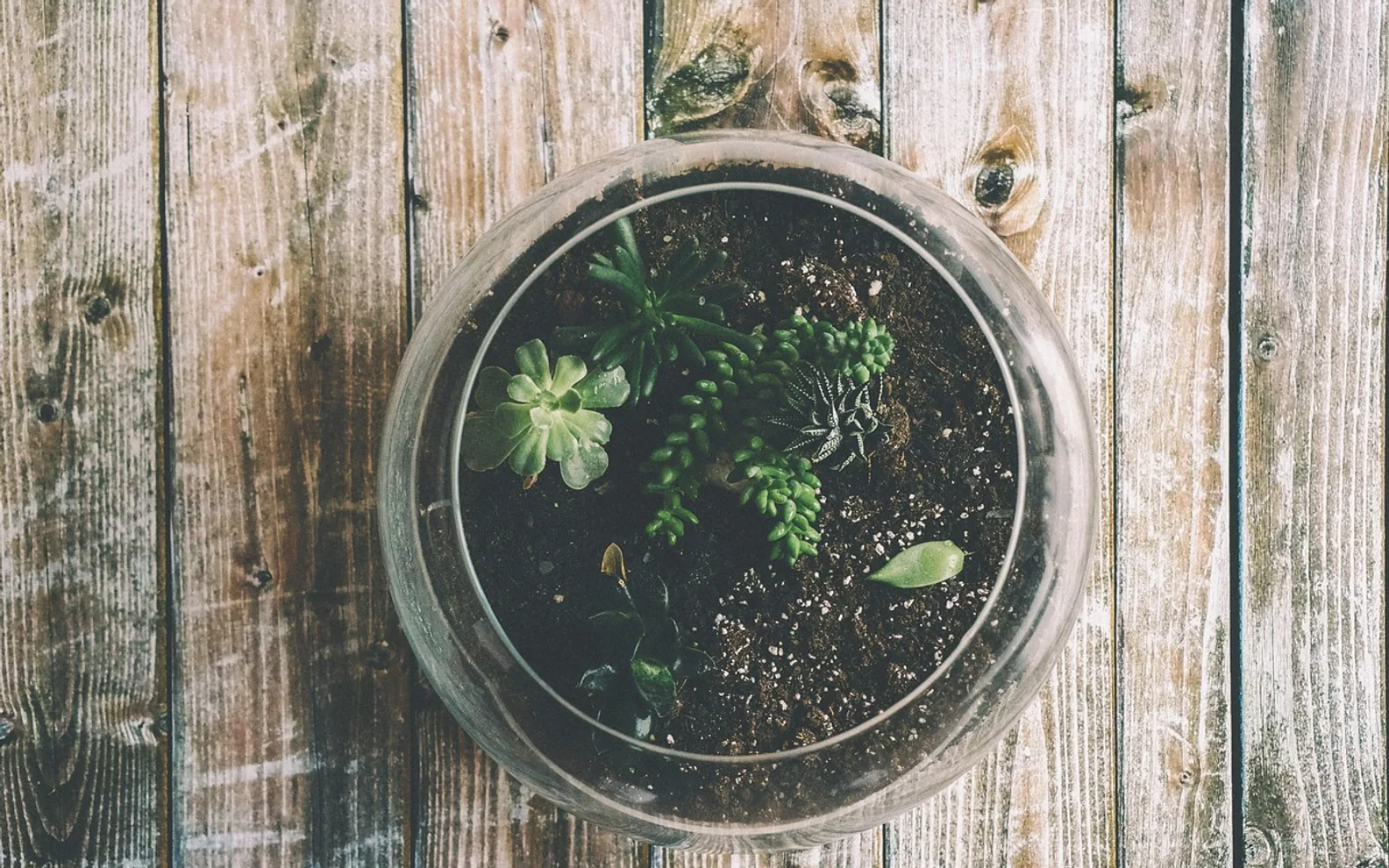
There is something quietly absorbing about a garden you can hold in your hands. A terrarium turns a jar, bowl or old fish tank into a miniature landscape, complete with tiny hills, mossy ground and leaves pressed against the glass. It suits flats without a balcony, desks that need a little life, and anyone who enjoys a hands-on hobby that rewards patience more than skill.
You do not need special equipment to make your first one. A clear container, a few bags of growing material and two or three small plants are enough. The key is understanding which type of terrarium you are building, because that decision shapes every choice after it.
Open or closed: decide first
Terrariums come in two broad styles, and they suit completely different plants.
| Closed terrarium | Open terrarium | |
|---|---|---|
| Container | Jar or vessel with a lid or stopper | Bowl, dish or vase with a wide mouth |
| Air inside | Humid; moisture recycles on the glass | Dry; air moves freely |
| Plants that enjoy it | Mosses, small ferns, fittonia, baby tears | Succulents, small cacti, air plants |
| Watering | Rarely, once the balance settles | Sparingly, when the soil is fully dry |
Mixing the two groups in one container rarely works. Succulents tend to rot in the damp air of a sealed jar, while ferns shrivel in a dry, open bowl.
Materials for the base
- A drainage layer of small pebbles, gravel or clay pebbles, so excess water has somewhere to collect away from the roots.
- A barrier such as a thin piece of mesh or a layer of dried moss to stop soil washing down into the stones.
- Horticultural charcoal (optional), which many growers add to help keep a closed jar smelling fresh.
- Growing mix suited to the plants: a light, moisture-holding mix for tropical plants, or a gritty cactus mix for succulents.
- Decoration such as stones, bark or a small figure, if you like a scene with character.
Building it, layer by layer
- Clean the glass. Wash the container with warm soapy water and dry it well. Smears are much harder to reach once plants are inside.
- Add the drainage layer. Pour in enough pebbles to cover the bottom evenly. Taller containers can take a deeper layer.
- Lay the barrier. Spread the mesh or moss over the pebbles so the next layer stays put.
- Sprinkle charcoal if you are using it, just a thin scattering.
- Add the growing mix. Make it deep enough for roots to settle, and shape small slopes rather than a flat floor. Varied height makes the finished piece look far more natural.
- Plant from back to front. Make a hole with a spoon or chopstick, tease the roots loose, set each plant in and firm the soil gently around it. Tallest plants usually look best towards the back or centre.
- Finish the surface. Press sheet moss into bare patches, place stones and bark, then brush stray soil off the leaves with a soft paintbrush.
- Water lightly. A few sprays from a mister are usually plenty for a closed jar. For an open bowl, a small trickle at the base of each plant is enough.
Tools that make the job easier
Narrow-necked jars are fiddly with fingers alone. Long tweezers, a chopstick, a teaspoon taped to a stick and a funnel made from rolled paper let you place soil and plants precisely without knocking everything over.
Choosing a good spot
Bright, indirect light suits most terrariums. Direct midday sun through glass can heat a closed jar quickly and scorch the leaves inside, so a spot near a window but out of the strongest rays is ideal. Open succulent bowls can usually handle a sunnier position than mossy jars. Turn the container now and then so plants do not lean towards one side.
Looking after it
A closed terrarium tells you what it needs through the glass. A light mist of condensation that comes and goes through the day is a healthy sign. Heavy droplets that never clear suggest too much water, so open the lid for a few hours to let it breathe. Bone-dry glass and crisp moss mean it is time for a light misting.
Trim anything that grows too tall or touches the lid, and remove yellow or decaying leaves promptly so mould does not take hold. Open terrariums need even less: water only when the mix is completely dry and dust the glass occasionally.
Where to go next
Once you have built one, it is easy to get hooked. Try a themed scene, a tall cylinder with trailing plants, or a pair of matching jars for a shelf. If growing things indoors appeals to you, a few pots of kitchen herbs on a bright sill make a practical next step, and for a look at how small plant businesses are reaching new customers, read about online flower delivery shops and local florists.
 Leaf Mold: Turning Fallen Leaves Into a Free Soil Conditioner
  How to Plant Garlic in Autumn for a Summer Harvest
  What Vegetables to Plant in Fall: Quick Crops and Overwinterers