How to Plant Garlic in Autumn for a Summer Harvest
How to plant garlic: when to plant, hardneck or softneck types, clove depth and spacing, winter mulch, spring care and harvesting the bulbs in summer.
4 min
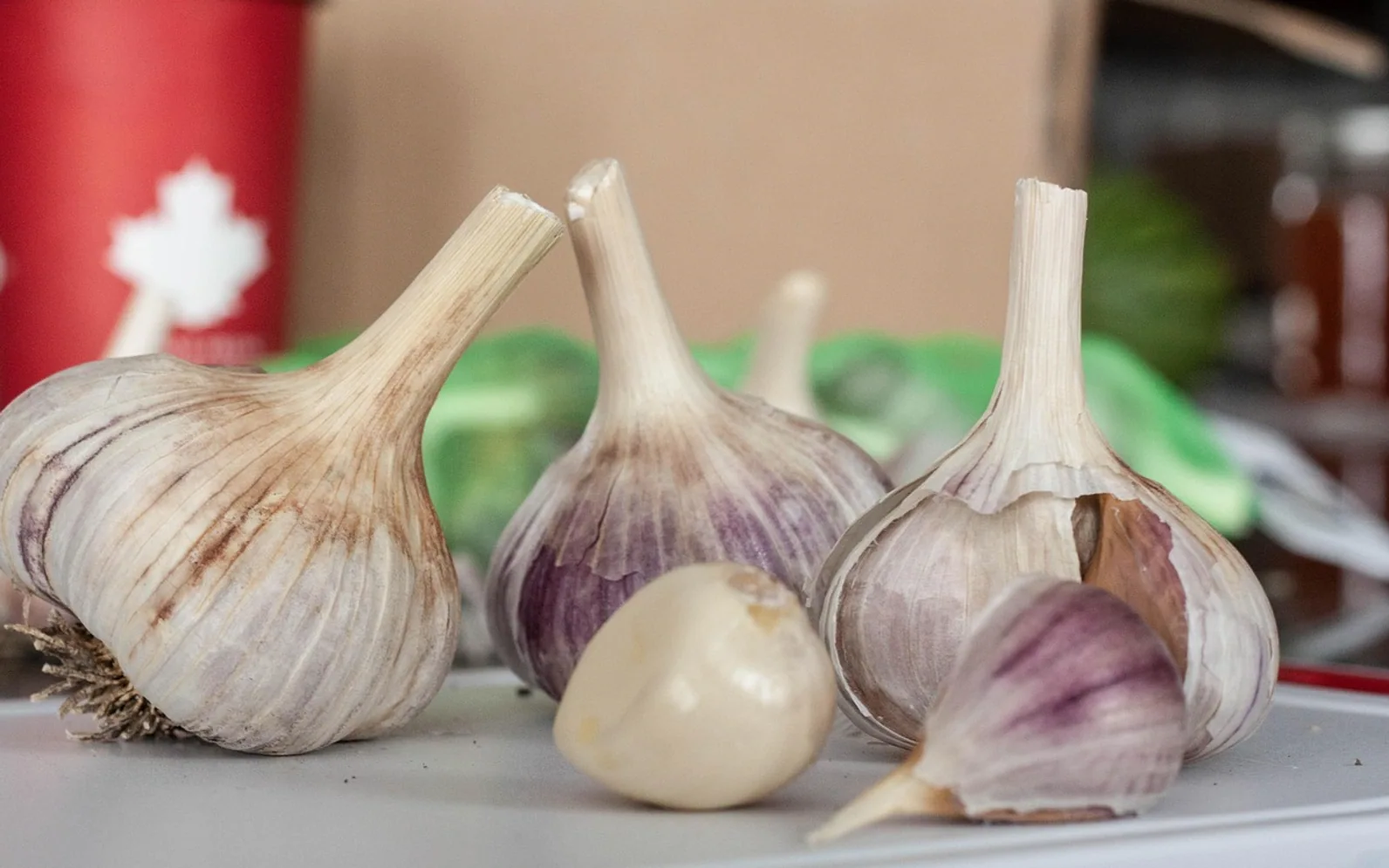
Plant garlic in autumn, a few weeks before the ground freezes, by pushing individual cloves pointed end up into loose, well-drained soil about 5 cm (2 inches) deep and 10 to 15 cm (4 to 6 inches) apart. Cover the bed with mulch, keep it weeded in spring, and the bulbs will be ready to lift the following summer. That is the whole method; the details below are what turn small bulbs into plump ones.
Garlic needs a long period of cold to divide properly into cloves, which is why autumn planting gives the best results in most climates. It spends winter growing roots, sends up leaves in spring and swells in early summer.
When to plant garlic
The aim is to give each clove time to grow roots before the soil turns cold, but not so much time that it sends up a lot of soft leafy growth before winter.
- Cold winters: plant roughly four to six weeks before the ground is expected to freeze, which usually means early to mid autumn.
- Mild winters: plant later in autumn or in early winter, once the soil has cooled.
- Missed the window? Early spring planting is possible, but bulbs are often smaller and may not divide fully.
Local frost dates are the most reliable guide, so check the typical first hard frost for your area and count back from there.
Hardneck or softneck?
| Hardneck | Softneck | |
|---|---|---|
| Best climate | Colder regions with proper winters | Milder regions |
| Cloves | Fewer, larger cloves around a stiff central stalk | More cloves in several layers |
| Bonus crop | Produces edible flower stalks called scapes | No scapes |
| Storage | Shorter, often a few months | Longer; the soft stems can be braided |
Buy garlic intended for planting from a garden supplier where you can. Supermarket bulbs may be a variety suited to another climate, and some are treated to slow sprouting, so results are unpredictable.
Preparing the bed
Garlic likes full sun and soil that drains freely; waterlogged ground over winter is the most common reason cloves rot. Loosen the soil to a spade's depth, remove weeds and work in well-rotted compost or crumbly leaf mold to improve structure. Avoid a spot where onions, leeks or other members of the same family grew recently, as rotating crops helps keep soil-borne problems down. If you are planning other crops for the same season, our list of vegetables to plant in fall suggests good neighbours for the bed.
How to plant garlic, step by step
- Split the bulb into separate cloves just before planting. Keep the papery skin on each clove.
- Choose the biggest cloves. Large cloves tend to grow large bulbs; small inner cloves can go to the kitchen instead.
- Mark rows about 30 cm (12 inches) apart, or plant in a grid in a raised bed.
- Plant each clove with the flat base down and the pointed tip up, about 5 cm deep, so the tip sits just under the surface of the soil once it is firmed.
- Space cloves 10 to 15 cm apart along the row.
- Water once to settle the soil if it is dry.
- Mulch with straw, shredded leaves or leaf mold, especially where winters are harsh. The layer protects against heaving as the ground freezes and thaws.
Care through winter and spring
- Weeding: garlic has narrow leaves and does not compete well, so keep the bed clear.
- Watering: steady moisture in spring helps bulbs swell. Reduce watering in the last couple of weeks before harvest so the bulbs can firm up.
- Feeding: a light feed when growth restarts in spring supports leafy growth, and growers often note that more healthy leaves go hand in hand with better-wrapped bulbs.
- Scapes: on hardneck types, snap off the curly flower stalks once they appear. Many growers find this helps the plant put energy into the bulb, and the scapes are good in the kitchen.
Harvesting and curing
Garlic is usually ready in early to mid summer, when the lower leaves have turned brown but several green ones remain at the top. Loosen the soil with a fork and lift the bulbs rather than pulling them by the stems. Lay them somewhere dry, airy and shaded for two to three weeks until the skins are papery and the necks are tight. Then trim roots and stems, or braid softneck types, and store them in a cool, dry place.
Save a few of the best bulbs for replanting in autumn. Over a few seasons, the strain adapts well to your garden.
Frequent mistakes
- Planting too late in spring, which leaves bulbs undivided.
- Planting cloves upside down; they will still grow, but less vigorously.
- Heavy, wet soil that rots cloves over winter.
- Harvesting too late, when the outer wrappers have split and the bulbs store poorly.
Questions gardeners ask
Can I grow garlic in a pot?
Yes. A deep container with drainage holes and good compost works well; a windowsill is too small for bulbs, but green garlic shoots can be grown alongside indoor herbs for snipping.
Why did my garlic not form cloves?
A single round bulb usually means the plant did not get enough cold, was planted too late or was short of space. Plant earlier next season and give it more room.
 When to Plant Tulip Bulbs (and How Deep to Set Them)
  How to Make a Terrarium
  Local Talent, Global Reach: Online Flower Delivery Shops as Marketplaces for Florists