Designing a Living Room for Film and TV Evenings
A living room for film and TV evenings with a French touch: viewing distance, low lamps, soft textiles, calmer acoustics, tidy boxes and a film shelf.
4 min
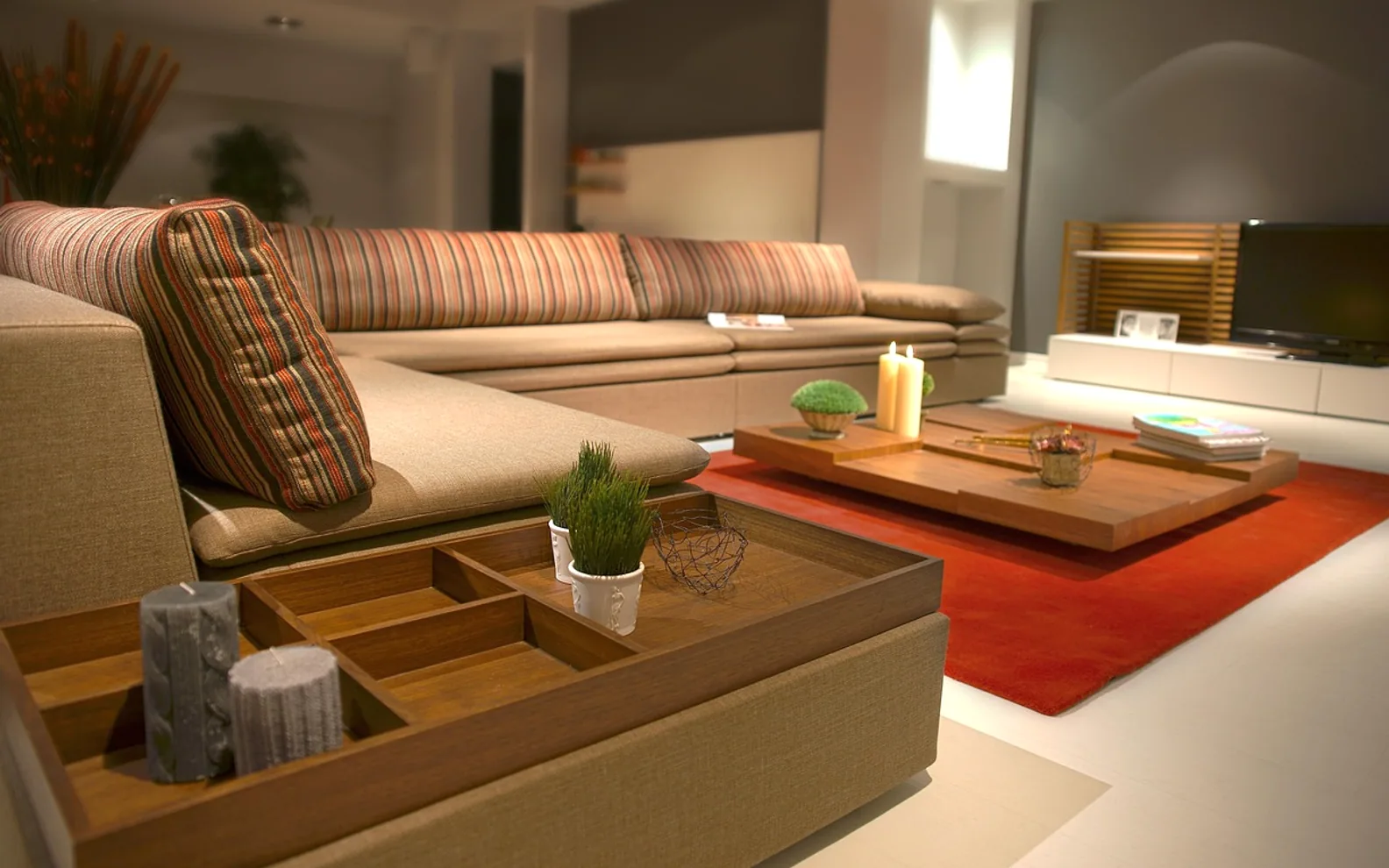
A living room designed for film and TV evenings puts comfort first and the screen second. Seats sit at a relaxed distance from the picture, light comes from low lamps rather than the ceiling, fabrics soften both the look and the sound, and the boxes and cables that come with modern viewing are tucked out of sight. The French approach to this kind of room is easy to borrow: keep it lived-in rather than themed, mix old pieces with new ones, and let the screen be one object among books, lamps and textiles instead of the centre of a shrine.
Start with the seats, not the screen
The most common mistake is to buy the screen first and fit the furniture around it. Begin with where people will actually sit for two hours. A deep sofa, one or two armchairs and something to put your feet on make a better film room than an expensive screen seen from a hard chair. If you are rethinking the whole room, our guide on arranging living-room furniture around focal points and walkways sets out the order of work.
How far should the sofa be from the screen?
There is no single right number. Larger screens need more distance and smaller ones less, and the aim is simply that the whole picture fits in your view without turning your head, while text on screen stays easy to read. Sit in the planned spot before you commit, play something with subtitles and adjust. Keep the centre of the screen close to eye height when seated; a screen hung too high is the quickest route to a stiff neck. For the placement itself, including glare from windows and the eternal fireplace question, see where to put the TV in different living-room layouts.
Soft, layered lighting
Watching in total darkness tires the eyes, and a bright ceiling light washes out the picture. The middle ground is a few low, warm sources placed out of the screen's reflection.
- A lamp beside the sofa with a fabric shade, for reading or knitting between episodes.
- A soft glow behind or beside the screen, which reduces the contrast between a bright picture and a dark wall.
- Dimmable fittings wherever possible, so one room can serve dinner, conversation and a late film.
- Candles or a small table lamp on a side table for the French bistro feel, kept well away from curtains.
Check each lamp with the screen switched off: if you can see it reflected in the black glass, move it.
Textiles that look good and sound better
Hard rooms echo. Bare floors, large windows and minimal furniture make dialogue harder to follow, which tempts you to turn the volume up and annoys the neighbours. Fabrics fix both problems at once.
| Element | Effect on the room | French-style choice |
|---|---|---|
| Rug | Absorbs footsteps and reflected sound from the floor | A faded wool or flat-weave rug, slightly worn rather than new |
| Curtains | Block glare and soften the window wall | Floor-length linen, lined for evening viewing |
| Cushions and throws | Add comfort and break up hard surfaces | Mixed textures in muted colours, nothing too matched |
| Upholstered seating | Absorbs more sound than leather or wood | A deep sofa in cotton, velvet or bouclé |
| Full bookshelves | Scatter sound so it does not bounce straight back | Books, boxes and objects at uneven heights |
Hiding cables and boxes
A tangle of wires beneath the screen undoes everything else. Run cables through a cover painted the colour of the wall, or along the back of a low sideboard. Routers and set-top boxes need air, so a cabinet with a ventilated back or a woven front works better than a sealed drawer. Keep one small basket for remote controls and you will save ten minutes of searching every week.
A small shelf for films
Even in a streaming household, a shelf for physical films, a few favourite books about cinema and a framed poster gives the room a personality that a home screen menu cannot. Keep it modest: one shelf or a low row in the bookcase is enough. Arrange the cases by colour or by mood rather than alphabetically if you want the shelf to read as decoration, and leave space for a plant, a lamp or a small object so it never looks like a shop display.
How French households watch now
Many homes in France now watch through internet TV, with channels and on-demand programmes arriving through the broadband connection instead of an aerial. That changes the furniture: the box sits next to the router, there may be no aerial socket to plan around, and a single cable can feed the screen. Viewers comparing services often search for a meilleur IPTV france option (the most suitable internet-TV service for their home), and the practical points are the same whichever they choose: pick a properly licensed provider, read its terms, check which devices it supports and decide where its box will live before the decorating is finished.
Does a film room need dark walls?
Not necessarily. Deep, muted colours reduce reflections and make the screen recede, but a soft off-white with good curtains and low lamps works well too. If you love colour, consider painting only the wall behind the screen.
Can a small living room work for film evenings?
Yes. Choose a screen sized for the room, fold-away side tables and a sofa you can sink into. In a small space, fabrics and lamps matter even more than size.
The aim is a room that feels as good at nine in the evening as it does on a Sunday afternoon, with the screen ready when you want it and quietly ignored when you do not.
 Clearing a House and Garden Before Selling: Where to Start and What to Let Go
 How to Clean a Dishwasher
 How to Choose the Perfect Wall Mural for Every Room in Your Hous