Where to Put the TV: Living-Room Layouts That Work
Where to put the TV in a living room: the fireplace question, window glare, plants near a screen, wall mount or console, hidden cables and corner layouts.
5 min
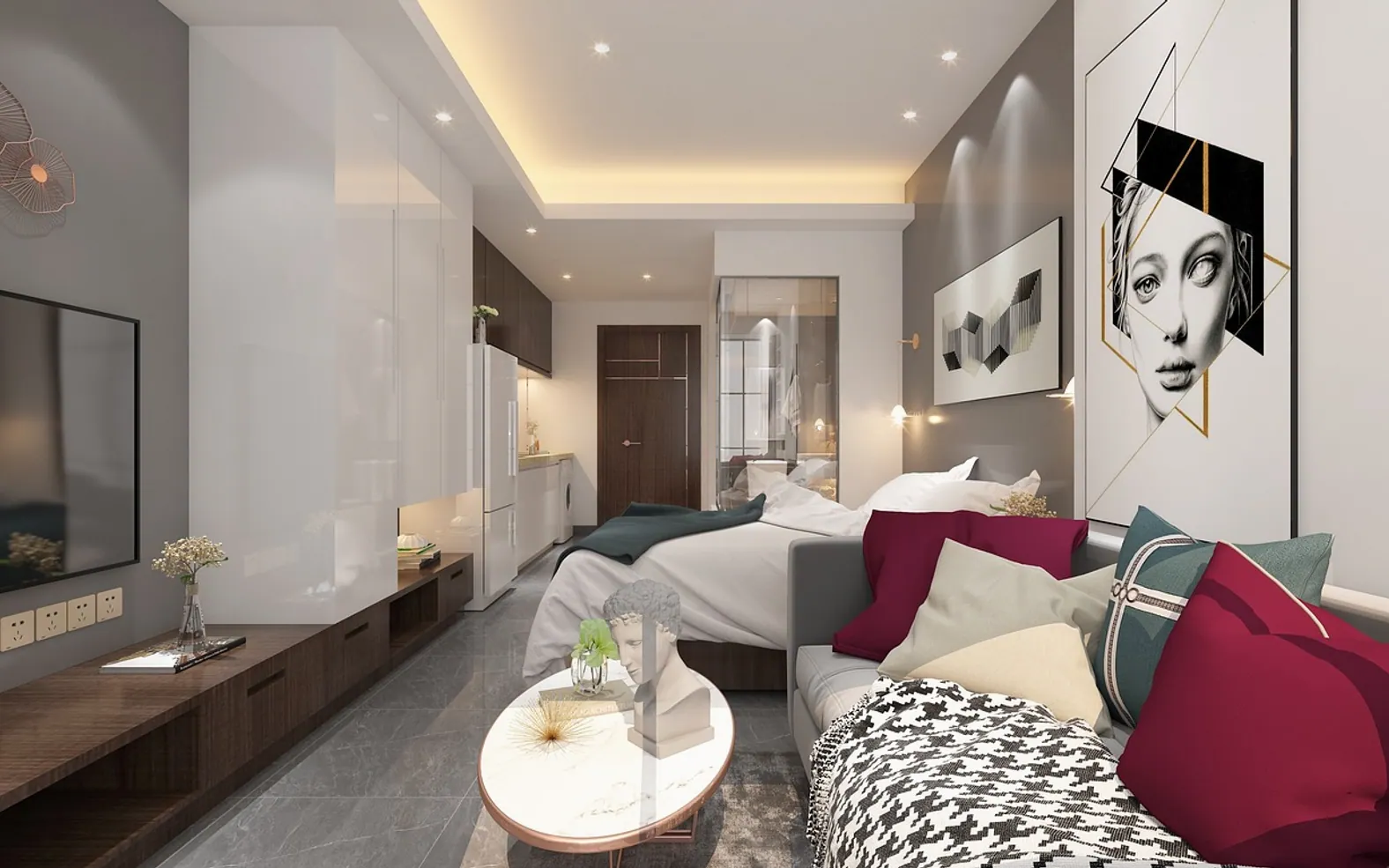
The best place for a television is on a wall that faces the main seating, sits at a right angle to the largest window, and lets the centre of the screen rest close to seated eye level. That single spot solves most of the problems people complain about: stiff necks, washed-out pictures in the afternoon and a sofa that has to turn its back on the room. Everything else in this article is about finding that wall in rooms that do not make it easy.
The fireplace dilemma
A mantel looks like the obvious stage for a screen. It is centred, it already draws the eye and the furniture usually faces it. The trouble is height and heat.
A screen above a fireplace often ends up far above eye level, so viewers tilt their heads back for an entire evening. That may be fine for an occasional film but tends to become uncomfortable when the television is on most nights. Wood-burning and gas fireplaces also send warm air and, at times, soot upward, which electronics and their vents do not enjoy.
If the fireplace wall is the only option, consider these compromises:
- A deep mantel shelf that deflects rising heat away from the screen.
- A pull-down mount that lowers the screen to a comfortable height when in use.
- Placing the screen beside the chimney breast in an alcove, leaving the mantel for candles, books or a mirror.
- Checking the manufacturer's guidance on heat and clearance before drilling anything.
Windows, daylight and glare
A screen facing a window reflects it; a screen with its back to a window forces your eyes to adjust between bright glass and a dark picture. The calmest arrangement puts windows to the side of the screen. Where that is impossible, layered window treatments help: sheer curtains soften daytime light, while lined drapes or blinds handle the low winter sun that slides in under the eaves late in the afternoon.
Lamps matter too. A soft light behind or beside the screen reduces the contrast between the bright image and a dark wall, which many people find easier on the eyes during long evenings.
Greenery around the screen
Plants soften the hard edges of a television wall, but the spot next to a screen is not always kind to them. Think about three things before you pot anything up.
| Factor | What happens near a screen | What to do |
|---|---|---|
| Light | TV walls are often the darkest in the room, chosen to avoid glare | Pick shade-tolerant foliage or add a small grow light on a timer |
| Heat | Vents on the back and top release warm, dry air | Keep leaves a hand's width from vents and away from the top edge |
| Humidity | Misting and watering can splash onto electronics | Use saucers, water away from the console and avoid misting nearby |
Trailing plants on a high shelf, a tall floor plant at one side of a console, or a closed glass container on the media unit all bring life to the wall without crowding the screen. A sealed glass garden is a tidy choice here, since the moisture stays inside the glass.
Wall mount or console?
Both have a place, and the choice is often about how permanent the room feels.
Mounting on the wall
A mount frees floor space, keeps the screen out of reach of small hands and pets, and allows a slim, gallery-like look. It does involve drilling, locating studs and planning the cable route before the screen goes up.
Setting it on a console
A low cabinet keeps everything flexible. You can move the screen when you rearrange furniture, and the cabinet itself provides storage for remotes, game controllers and streaming boxes. Renters often prefer this route. Choose a console a little wider than the screen so the composition feels grounded rather than top-heavy.
Hiding cables and boxes
Few things undo a well-styled room faster than a tangle of wires below the screen. Many homes now have a small receiver or streaming device alongside the television, especially when they watch live channels through internet IPTV instead of a traditional cable feed. Keeping that equipment out of sight is mostly a matter of planning:
- Run cables through a paintable cord channel that matches the wall colour, or, where permitted, an in-wall kit rated for that use.
- Choose a console with a closed back panel and a cut-out for ventilation and wiring.
- Store small boxes behind cabinet doors with mesh or slatted fronts so remote signals and airflow still reach them.
- Bundle spare length with soft ties and label each plug at the power bar.
A corner for open-plan rooms
In open-plan spaces, the long walls are often taken by windows, kitchen units or doors. A corner placement can rescue the layout. Angle the screen to face the sofa diagonally, which also leaves the remaining walls free for shelving or art. A corner cabinet or a swivel mount makes this tidy, and it tends to create a cosier viewing nook at one end of a large room rather than letting the screen dominate the whole space. For more on grouping seating around a focal point, see our guide to arranging furniture in a living room.
Making the screen disappear
How can a black rectangle look like part of the decor?
Surround it with things that share its shape and scale. A gallery wall of framed prints around the screen turns it into one frame among many. Shelving on both sides, styled with books and objects, does the same; our notes on styling a bookshelf help keep those shelves balanced.
What are the options when you want it gone entirely?
Cabinets with folding or sliding doors can close over the screen when it is off. Some televisions also offer an art or ambient mode that displays artwork or a neutral pattern while idle, and slim frames can give the edge of the screen a picture-frame look. Whichever route you choose, aim for a room that feels finished with the screen dark.
Start with the seat you use most, sit down and look at each wall in turn. The one you can face comfortably, without squinting at a window or tilting your head, is usually the answer, and the plants, frames and cabinets can be arranged around it afterwards.
 Accent Wall Ideas That Suit Real Rooms
 How to Choose Paint Colors for Any Room
 How to Arrange Furniture in a Living Room