How to Decorate a Mantel That Looks Good All Year
How to decorate a mantel: pick an anchor piece, layer heights in a symmetrical or off-centre arrangement, keep things clear of heat and swap details by season.
4 min
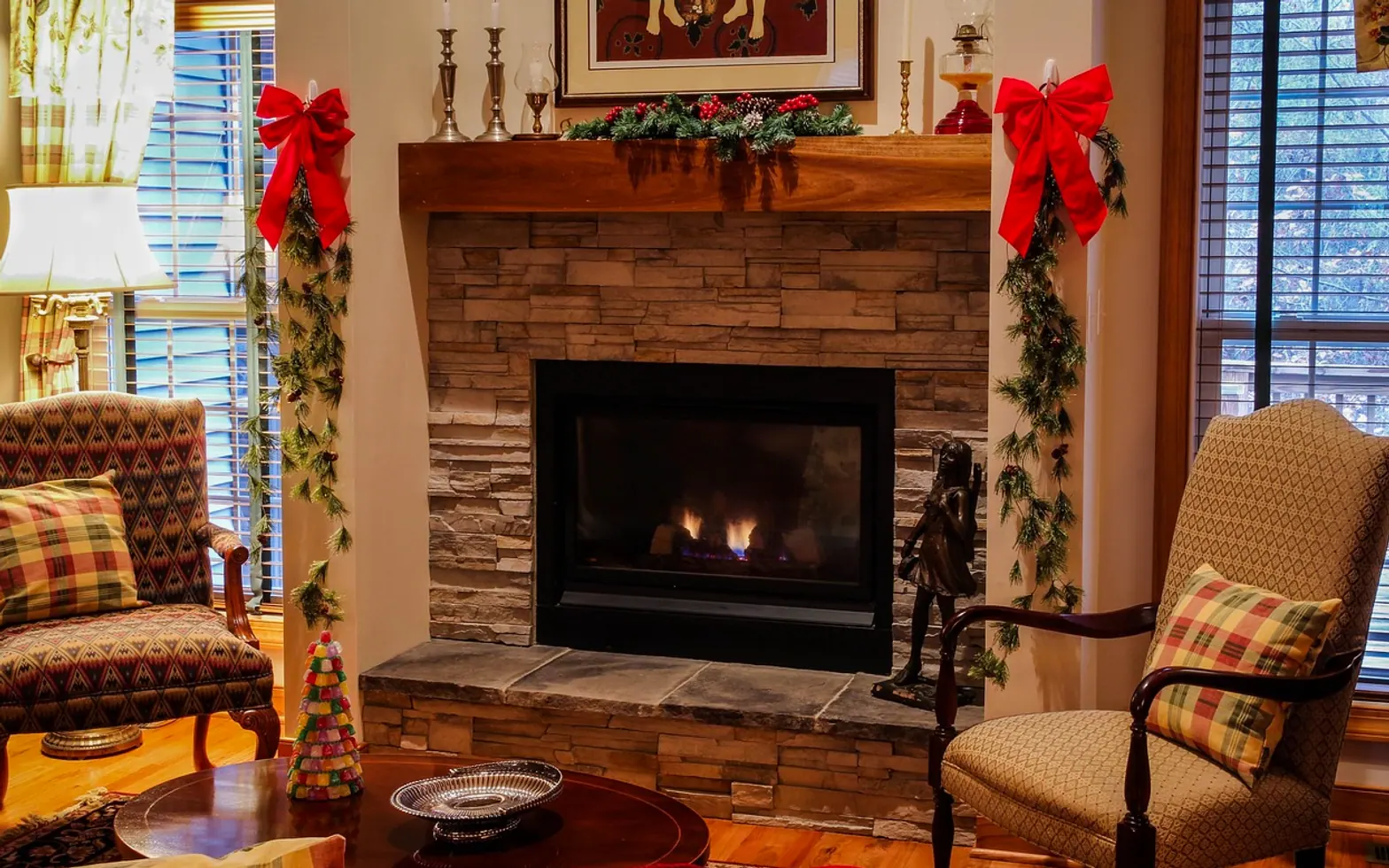
Most mantels end up as landing strips. Keys, a birthday card from March, a candle stub, the remote and a framed photo nobody has looked at in a year sit in a row along the shelf, all roughly the same height. The fireplace below may be handsome, but the shelf above it reads as an afterthought, and because the fireplace wall is usually the focal point of the room, that afterthought is the first thing anyone sees.
Decorating a mantel well comes down to a short order of work: clear it, choose one anchor, add pieces in descending height, then edit. The rest is taste.
Start with a clean slate
Take everything off and wipe the shelf. Look at the wall behind it before putting anything back. A pale, plain wall lets objects stand out; a dark or patterned wall needs fewer, bolder pieces. If the chimney breast feels flat, it can carry colour of its own, and several of the accent wall ideas for living rooms work especially well on that projecting section of wall because it already frames itself.
Measure the shelf depth and its height above the floor as well. A narrow shelf limits how much you can layer, and a high one changes which objects can be seen properly from the sofa.
Choose an anchor
The anchor is the largest piece and the one everything else answers to. Typical choices:
- A mirror, round or arched, which bounces light around the room and makes a small lounge feel wider.
- A large artwork or print, either hung on the wall or leaned against it for a more relaxed look.
- A pair of tall vases or candlesticks placed towards each end, when the wall above holds something else.
- A painted or papered backdrop. A scenic panel above the fireplace can do the anchor's job by itself; the advice on matching a mural to the room it lives in applies here too.
As a rough guide, an anchor that spans around half to two thirds of the mantel's width tends to look settled. Much narrower and it floats; wider and it crowds the ends.
Symmetrical or off-centre?
Both approaches work. The choice depends on the room's character more than on trends.
| Symmetrical | Off-centre (asymmetrical) | |
|---|---|---|
| How it is built | Anchor in the middle, matching pairs on either side | Anchor shifted to one side, balanced by a group of smaller pieces on the other |
| Feel | Formal, calm, orderly | Relaxed, collected over time |
| Suits | Period fireplaces, traditional rooms, centred furniture | Modern rooms, uneven alcoves, rooms with a window to one side |
| Common trap | Looking stiff when every item is paired | Looking accidental when there is no clear counterweight |
A useful middle ground is a symmetrical frame, such as matching candlesticks at both ends, with a looser, off-centre cluster between them.
Layer from tall to small
- Tall pieces. The anchor, then any tall vases, branches or candlesticks. Keep them towards the back.
- Mid-height pieces. Small framed pictures, a short stack of books with an object on top, a lantern, a ceramic jug. Overlap them slightly with the tall layer so the arrangement has depth rather than reading as a single row.
- Low pieces. A bowl, a sculptural stone, a small plant or a votive. These sit at the front and fill gaps.
- Something living. Trailing greenery or a few cut stems softens hard edges. Choose plants that tolerate the warmth and dryness near a fireplace, or rely on dried stems in heating season.
- Edit. Step back to where you usually sit and remove one item. Odd-numbered groups of three or five tend to look more natural than even rows, and some bare shelf is part of the design.
The same principles of height, grouping and breathing space carry over from styling a bookshelf without clutter, so if the room has both, repeat a colour or material across the two to tie them together.
Safety and practical points
- Keep anything flammable, including dried flowers, paper garlands and fabric runners, well away from an open fire or stove, and follow the appliance maker's clearance guidance.
- Real candles should never be left burning unattended; battery candles give a similar glow without the risk.
- Fix mirrors and heavy art to the wall with suitable fixings rather than relying on the shelf to hold them upright, particularly in homes with children or pets.
- Heat rising from a working fireplace can warp frames and fade prints over time, so use the mantel for sturdier objects if the fire is lit often.
What about the television?
Many living rooms are built around the fireplace, so the screen ends up competing for the same wall. Mounting it over the mantel often places it too high for comfortable viewing and exposes it to rising heat. Where space allows, an alcove beside the chimney breast leaves the mantel free to be decorated properly. The trade-offs are covered in more detail in the guide to where to put the TV in a living room.
Changing it with the seasons
A well-built base arrangement can stay for months while a few details rotate. Keep the anchor and the tall pieces, and swap the smallest layer:
- Spring: bulbs in pots, pale ceramics, fresh stems.
- Summer: an empty grate filled with a basket of logs or a large plant, shells or stones from a trip, lighter textiles.
- Autumn: seed heads, small gourds, warm-toned candles, dried grasses kept clear of the heat.
- Winter: evergreen sprigs, a simple garland, extra candlelight, a few cards on a string rather than spread along the shelf.
Store the seasonal pieces together in one labelled box. Changing the mantel then takes ten minutes instead of an afternoon, and the room never drifts back into that landing strip of keys and stray post.
 How to Style a Bookshelf Without Making It Look Cluttered
 Accent Wall Ideas That Suit Real Rooms
 How to Choose Paint Colors for Any Room