How to Style a Bookshelf Without Making It Look Cluttered
How to style a bookshelf: clear it, mix upright rows with stacks, add objects in balanced groups, leave breathing space and light the shelves well.
4 min
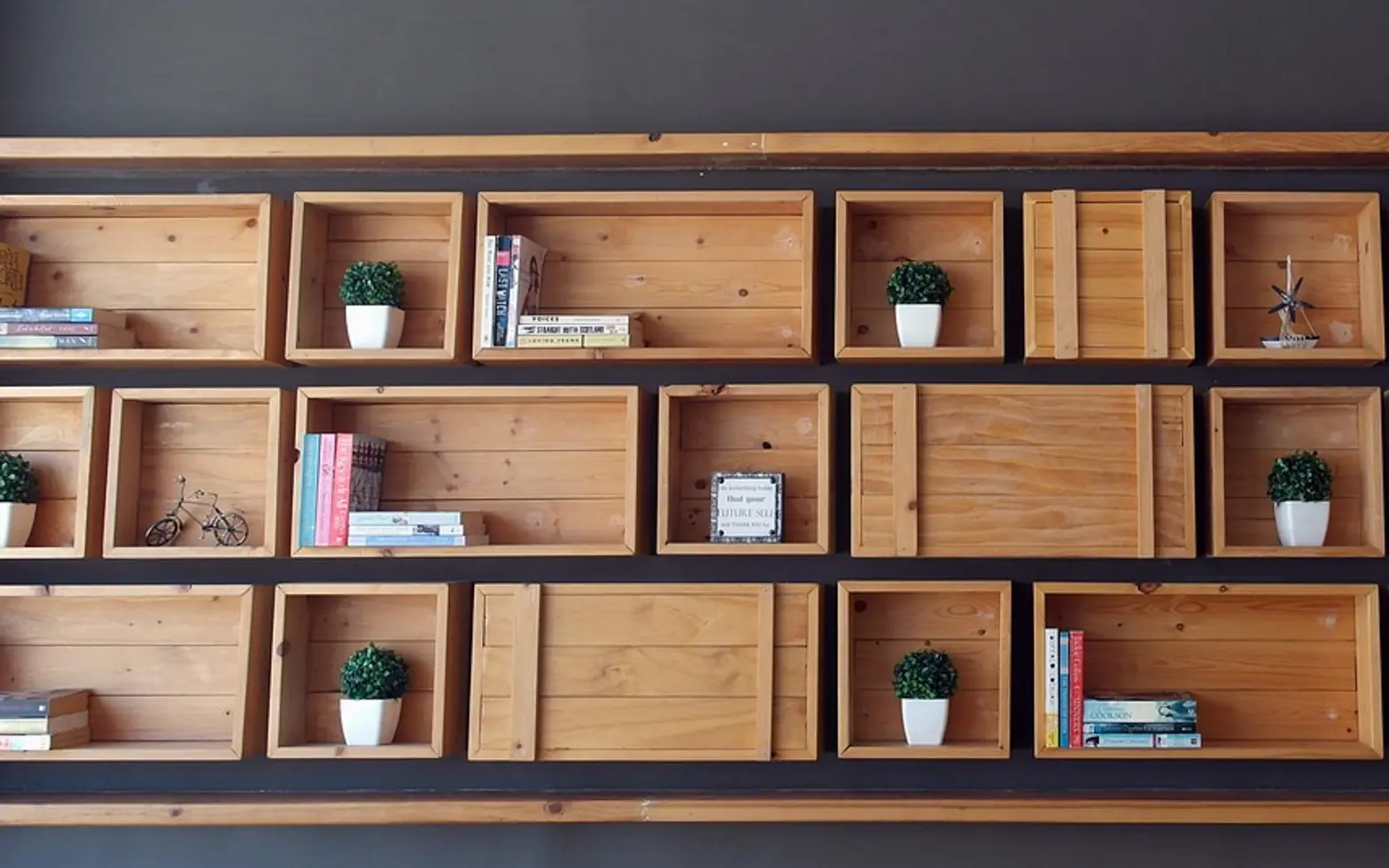
To style a bookshelf, start with empty shelves, put the books back first in a mix of upright rows and horizontal stacks, then add a few larger objects, spread them out in a zigzag so no single shelf feels heavy, and leave some space empty. Finish with a plant or two and a little light. Most cluttered shelves are not short of nice things; they simply have too many of them at the same size and height.
A good bookshelf is both storage and display. The goal is shelves that look relaxed and personal but still let you find and reach the books you actually read.
Before you begin
- Empty everything. Styling around existing clutter rarely works. Take it all off, dust the shelves and look at the frame bare.
- Sort into piles: books you keep, books to pass on, objects you love, and storage items such as boxes and baskets.
- Consider the back panel. Painting or papering the back of the shelves is an easy way to make them stand out; a colour pulled from an accent wall or the main palette of the room ties it all together.
- Secure tall units. Freestanding bookcases should be anchored to the wall with a suitable fixing, especially in homes with children or pets, as a loaded case can tip.
The order of work
- Heavy and hidden at the bottom. Put baskets, lidded boxes or large books on the lowest shelves. They ground the unit visually and hide everyday clutter.
- Books next. Place them in groups rather than filling every shelf end to end. Alternate upright rows with horizontal stacks of three to six books.
- Large objects third. Add vases, framed prints, sculptural pieces or a small mirror. Set them in a loose zigzag from shelf to shelf so they are not lined up in one column.
- Small objects last. Use stacks of books as risers for small items, which keeps them from getting lost.
- Edit. Step back across the room, then remove one or two items. This step is the one most people skip.
Ways to arrange the books
| Approach | Effect | Downside |
|---|---|---|
| By colour | Striking, graphic, very calm from a distance | Harder to find a specific book |
| By subject or author | Practical and personal | Can look busy with mixed spine colours |
| By size | Neat lines and tidy stacks | Scatters related books |
| Spines facing in | A soft neutral look | Impractical for anyone who reads the books |
A mix often works best: subject order on reachable shelves, more decorative arrangements higher up or in the corners.
Styling tricks that help
- Vary height. Combine tall, medium and low items on each shelf rather than lining up objects of the same size.
- Group in odd numbers. Clusters of three tend to look more natural than pairs, a well-used rule of thumb among decorators.
- Repeat colours. Pick two or three accent colours and scatter them across the shelves to create rhythm.
- Layer. Lean a small framed print at the back and place a low object in front of it for depth.
- Add greenery. A trailing plant on a high shelf softens hard lines. A small glass terrarium suits shelves with little light because it needs very little care.
- Leave negative space. Aim for some breathing room on every shelf. Empty spots give the eye somewhere to rest.
Lighting the shelves
Shelves sitting in shadow look flat in the evening. Battery puck lights under each shelf, a slim strip light along the uprights or a picture light above the unit all bring out texture. Even a nearby table lamp angled toward the shelves helps. Keep the colour temperature consistent with the rest of the room's lighting so the bookcase does not glow a different shade.
Where the bookshelf sits matters too
A beautifully styled shelf can still look awkward if it is crammed beside a doorway or blocked by a chair. Think of it as part of the room's layout; the principles in arranging living room furniture help decide where a bookcase balances the space rather than crowding it.
Common mistakes
- Filling every inch, which turns a display into storage.
- Using only small trinkets, which reads as clutter from across the room.
- Making every shelf identical, which feels stiff.
- Putting the heaviest-looking items at the top, which makes the unit look top-heavy.
- Forgetting to edit after a few weeks as new things accumulate.
Questions about bookshelf styling
How many items should go on each shelf?
There is no fixed number. A useful test is whether you can see a little of the back panel on every shelf. If you cannot, take something away.
How can I style a bookshelf with very few books?
Use books horizontally as bases, add baskets for storage, and let art, ceramics and plants carry more of the display. Wider spacing looks intentional as long as objects are larger.
How do I keep it looking good?
Do a short edit every season. Swap a couple of objects, return stray items to where they belong and dust while you are there.
 How to Choose Paint Colors for Any Room
  How to Arrange Furniture in a Living Room
  Creative Concepts to Make Your Wedding Reception Stand Out