How to Clean a Shower Head (Soak, Scrub and Clear the Nozzles)
How to clean a shower head with a vinegar soak or bag, clear blocked nozzles, rinse the filter screen and keep limescale from building up again.
4 min
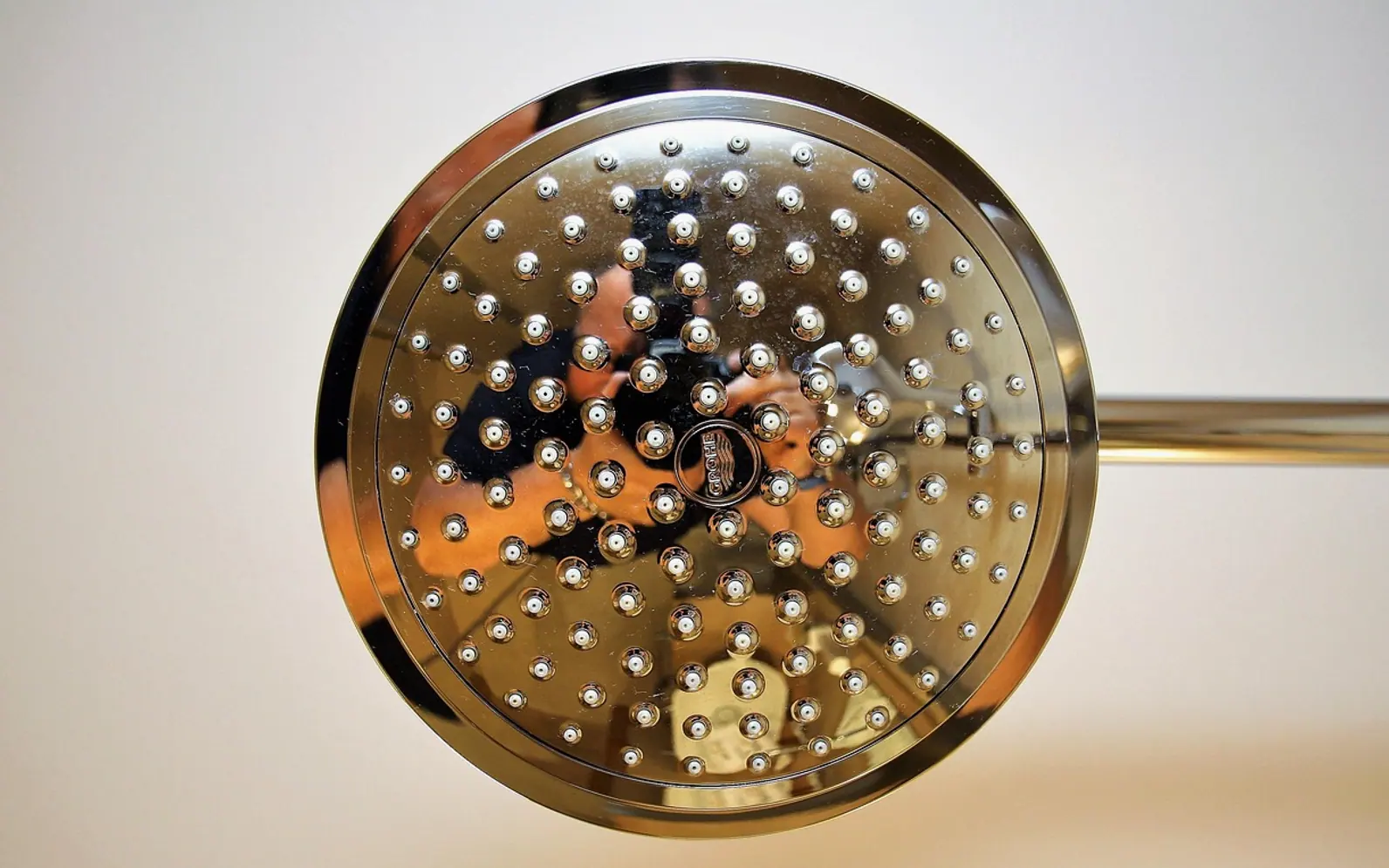
The quickest way to clean a shower head is to soak it in white vinegar for 30 minutes to an hour, rub the rubber nozzles with a fingertip or a soft brush to push out the loosened scale, then run hot water through it for a minute. If the head cannot come off, fill a sturdy plastic bag with vinegar, tie it around the head with a rubber band so the face is submerged, and leave it the same way. That handles most cases of weak, uneven or sideways spray.
The culprit behind a tired shower is almost always limescale. Hard water leaves calcium and magnesium behind each time the head dries, and those deposits narrow the tiny outlets until some jets fade and others shoot off at odd angles. Mould and soap film can add to it, particularly on the face of the head and in the hose joints.
What you need
- White distilled vinegar (citric acid dissolved in warm water works too)
- A bowl or jug deep enough for the head, or a strong freezer bag and a rubber band
- An old soft toothbrush
- A cocktail stick or a pin for stubborn nozzles
- An adjustable spanner and a cloth, if the head screws onto a fixed arm
- Thread tape, in case the old seal needs replacing
Method 1: remove and soak
- Unscrew the head. Handheld heads twist off the hose by hand. Fixed heads may need a spanner; wrap the nut in a cloth first so the jaws do not mark the finish.
- Check the inlet. Many heads hide a small mesh screen or washer where they join the hose. Pull it out gently and rinse it under the tap; grit trapped here can choke the flow on its own.
- Soak. Submerge the head in vinegar. Thirty minutes is enough for light scale, a couple of hours for heavier build-up. Overnight soaks are best kept for plain chrome or plastic.
- Scrub and poke. Brush the face, then massage each rubber nozzle so the flakes break off. Use the pin only on hard metal outlets, and only lightly.
- Rinse and refit. Rinse in warm water, refit the screen and washer, wrap the arm thread with fresh tape if it was leaking, and hand-tighten before a final gentle quarter turn.
- Flush. Run the shower hot for a minute to clear any loosened scale.
Method 2: the bag trick for fixed heads
When the head is sealed in or the fittings look fragile, bring the vinegar to the head. Half-fill a freezer bag, slip it over the head so the spray face sits in the liquid, and secure the top around the arm with a rubber band or a twist tie. After the soak, remove the bag over the bath, brush the face, and run the water to flush it through. It is less thorough than a full soak because the inlet screen is never reached, but it fixes most weak sprays without any tools.
Which cleaner suits which finish?
| Finish | Suggested approach | Take care with |
|---|---|---|
| Chrome or plastic | Vinegar or citric acid soak, soft brush | Very long soaks on cheap plating |
| Brushed nickel, brass, gold-tone or matte black | Short soak in diluted vinegar, or the maker's recommended cleaner | Acids can dull or strip coloured coatings |
| Stone-mounted or ceramic surrounds | Bag method, kept off the surround | Vinegar etches marble and limestone |
Read the care leaflet if you still have it. Some finishes are only meant to be wiped with mild soapy water, and a scratched or dulled coating cannot be put back.
When cleaning does not fix the pressure
If every nozzle is clear and the flow is still feeble, look further back. A kinked hose, a flow restrictor fitted inside the head, a partly closed isolation valve or a struggling mixer valve can all starve the shower. Low pressure across every tap in the home points to the supply rather than the head. Persistent drips, damp patches below the bathroom or water where it should not be are worth a professional look, and the case for calling in experienced bathroom fitters grows stronger whenever the problem sits behind tiles. Choosing a head with a lower flow rate is also one of the simpler ways to use less hot water, as explained in the piece on plumbing that saves water and energy.
Keeping scale away
- Wipe or rub the nozzles once a week while you are still in the shower; it takes seconds and stops scale setting hard.
- Give the head a short vinegar soak every month or two in hard-water areas, less often in soft-water ones.
- Leave the bathroom door open or the fan running after a shower so the room dries faster.
- Descale other appliances on the same schedule. The routine for cleaning a dishwasher and its filter uses the same kind of mild acid.
Quick answers
Can I use bleach instead of vinegar?
Bleach tackles mould but does nothing for limescale, and it must never be mixed with vinegar or other acids because the combination releases harmful gas. Use one product at a time and rinse well between them.
Does baking soda help?
A paste of baking soda and water is a gentle scrub for the face of the head. Adding it to the vinegar soak mostly produces fizz; the acid does the real work.
How do I know it is time for a new head?
Cracked nozzles, a corroded face or a head that clogs again within days of cleaning is usually cheaper to replace than to keep rescuing.
 How to Clean a Dishwasher
 How to Choose the Perfect Wall Mural for Every Room in Your Hous
 Greener Pipes, Lower Bills: How Plumbing Services Support Water and Energy Savings